
Guide to Managing Dual Diagnosis in Top Sober House Ohio
January 23, 2026
Navigating the Threshold to Integrated Recovery
Rising prevalence of co-occurring disorders in Ohio
Ohio clinicians are witnessing a marked rise in clients presenting with both mental health challenges and substance use disorder. Anxiety, bipolar symptoms, and opioid cravings often intertwine, turning ordinary cravings into dangerous relapse triggers. Families in Cleveland sober homes now ask for co-occurring disorders recovery support more often than ever. Public health data suggest the number of residents needing Ohio dual diagnosis sober living solutions grows each season. As the need expands, sober housing providers must develop programming that treats depression and substance use with equal urgency.
Community hospitals report emergency visits where alcohol abuse masks untreated PTSD. Without integrated mental health and addiction care Columbus residents struggle to maintain stability after discharge. Standard detox alone rarely addresses trauma roots, leaving individuals vulnerable when cravings resurface. A supportive environment that blends therapy, medication management, and peer support fills this critical gap. Top Sober House therefore focuses on building trauma-informed routines and partnerships that holistically serve Buckeye State communities.
Why Top Sober House Ohio stands apart in dual diagnosis support
Top Sober House understands that effective sober living hinges on structure tailored to intricate needs. Each home maintains clear house rules while remaining flexible for medication schedules and therapy appointments. This dual focus helps residents manage bipolar swings while practicing relapse prevention for co-occurring disorders. By embedding cognitive behavioral checkpoints into chore rotations, house managers reinforce healthy thinking patterns daily.
Many residents arrive after exploring the co-occurring disorder friendly homes in Ohio catalog on our site. That searchable directory guides families toward neighborhoods that match personal triggers, transportation needs, and therapist proximity. The deliberate match reduces early recovery stress and encourages engagement with nearby 12-step meetings addressing mental health and addiction. Through this transparent placement process, Top Sober House elevates trust and fosters long-term sobriety with mental health stability.
Peer mentorship further distinguishes the program. Senior residents model coping skills for newcomers grappling with depression and substance use recovery environments in Ohio. House managers receive training on crisis de-escalation, ensuring immediate support when anxiety peaks. This layered supervision cultivates a safe place where growth, vulnerability, and accountability thrive together.
From inpatient treatment to a supportive environment the continuum of care
Sustained wellness rarely follows a single-step intervention. Instead, recovery unfolds along a continuum that begins with detox, moves through inpatient treatment, and extends into sober housing. Top Sober House bridges this transition by liaising with residential treatment center discharge planners across Dayton and Cincinnati. Clients leave clinical settings knowing their next address offers consistent structure and ongoing therapy access.
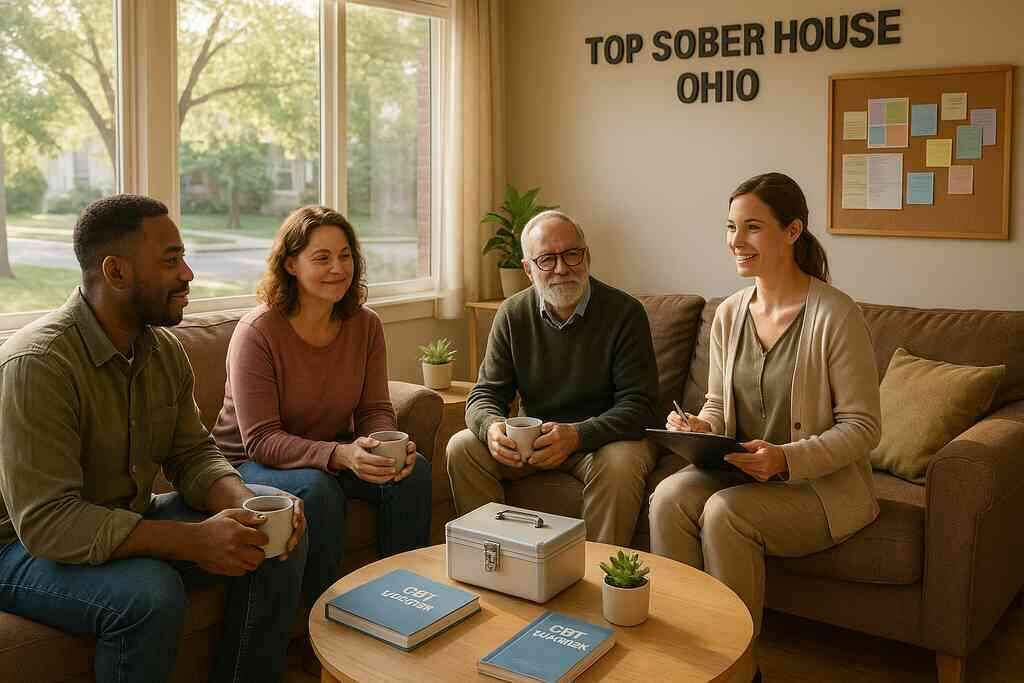
Within sober homes, a structured daily routine balances chores, CBT workbooks, and 12-step meetings. Residents learn to convert clinical insights into lived habits, transforming coping theory into practiced resilience. Access to outpatient programs ensures medication adjustments occur quickly, preventing relapse sparked by unmanaged symptoms. Such coordination exemplifies integrated mental health and addiction care that Columbus providers advocate for statewide.
Finally, after several months of progress, house managers help residents craft personalized exit strategies. These plans identify community supports, alumni networks, and safe transitional housing to prevent treatment drop-off. By framing departure as another step rather than an end, Top Sober House reinforces that recovery journey momentum endures beyond any single address.
 The Triple Framework of Dual Diagnosis Mastery in Ohio Sober Homes
 The Triple Framework of Dual Diagnosis Mastery in Ohio Sober Homes
Building a trauma informed sober living environment for PTSD and substance abuse
Residents wrestling with trauma rarely feel secure in ordinary Ohio dual diagnosis sober living settings. Top Sober House therefore layers trauma-informed design into every hallway, chore chart, and conversation. Warm lighting, private reflection areas, and predictable schedules reduce hypervigilance that fuels alcohol abuse. Staff members greet residents by name, a small gesture that counters the anonymity many experienced in chaotic group homes. Morning check-ins invite discussion of flashbacks or cravings, so solutions develop before distress spirals.
Physical safety alone cannot calm a triggered nervous system, so the program also addresses emotional security. House managers employ grounding exercises when nightmares wake residents who have survived violence. Art therapy sessions let veterans externalize images without verbally reliving them. Peer feedback circles give survivors a voice in shaping house rules, turning vulnerability into leadership. Families exploring the directory of Ohio supportive sober housing often choose these trauma-responsive halfway houses because relatives can finally breathe, knowing their loved ones sleep peacefully.
House rules that honor mental health needs and medication management
Clear expectations help every resident, yet rigidity can endanger someone battling bipolar swings. Top Sober Homes Ohio therefore writes house rules through a mental-health lens, balancing accountability with compassionate flexibility. Quiet hours protect sleep hygiene; however, exceptions exist for late-night panic attacks requiring staff dialogue. Breathalyzer checks remain non-negotiable because sobriety underpins stability, but they occur respectfully without public shaming. Such balanced governance prevents rule anxiety from morphing into relapse cravings.
Medication management receives equal attention, recognizing that lithium schedules or antidepressant titrations must remain sacred. Lockboxes secure prescriptions while still granting timely access, avoiding the resentment sparked by delayed doses in some sober homes. Weekly medication audits involve residents, teaching them to track side effects and collaborate with prescribers. This transparent system reduces diversion risks plus empowers clients to advocate for their psychiatric care. Ultimately, honoring mental health needs within policy nurtures trust and long-term sobriety.
Structured daily routine weaving CBT mindfulness and 12 step meetings
Routine transforms therapeutic theory into muscle memory, especially for co-occurring disorders recovery support in Cleveland sober homes. Each morning begins with mindful breathing, anchoring residents before the day’s duties. Cognitive behavioral therapy worksheets follow breakfast, replacing distorted thoughts with grounded perspectives about substance use disorder. Afternoon transportation shuttles clients to local 12-step meetings addressing mental health and addiction in unison. Evening gratitude lists close the loop, reinforcing neuroplastic pathways of hope.
House managers never assume one schedule fits everyone, so routines adjust around outpatient therapy or employment. Personalized calendars still keep the same healing pillars-CBT, mindfulness, and fellowship-so consistency outlives change. For a closer look at hourly templates, explore our daily Ohio recovery routine insights. Readers can adapt those frameworks for rural homes or urban apartments alike. Repetition may sound dull, yet predictability is an antidote to chaos that once ruled addiction.
Peer mentorship and house manager training for co-occurring disorders
Residents learn fastest from people walking the same road a few steps ahead. Peer-supported co-occurring disorder housing in Cincinnati pairs newcomers with alumni mentors within 48 hours. Mentors demonstrate coping skills live-calling sponsors when depression spikes, and attending extra meetings after difficult therapy. New arrivals watch, replicate, and refine these habits until they feel natural. This living curriculum eclipses any lecture on relapse prevention for co-occurring disorders.
Effective mentorship flourishes only when house managers guide the process with expertise. Therefore, Top Sober House sponsors quarterly workshops on motivational interviewing, suicide assessment, and de-escalation. Managers practice scenarios where psychosis meets alcohol cravings, honing calm responses under pressure. Training also covers cultural humility, ensuring fair support for every demographic in Ohio’s sober environments. When professional guidance and peer modeling intersect, residents receive a multidimensional map toward integrated recovery.
Community partnerships with evidence based outpatient dual diagnosis programs near Dayton and Columbus
Integrated mental health and addiction care Columbus clinicians praise begins long before discharge papers. Top Sober House signs memoranda with evidence-based outpatient dual diagnosis programs near Dayton, guaranteeing seamless handoffs. Counselors send progress notes securely to house managers, so relapse cues spotted in therapy receive home reinforcement. Conversely, housing staff alert clinicians when sleep patterns shift or appetite plummets. This two-way feedback loop prevents silent deterioration.
Partnerships stretch beyond therapy rooms into employment services, education grants, and volunteer opportunities. Residents complete vocational assessments through allied agencies, then practice interview skills during house workshops. Such wraparound resources convert sobriety into purposeful living, lowering the recurrence of drug abuse. When residents witness external professionals endorsing their efforts, self-worth climbs and cravings decline.
Family involvement and holistic self care rituals for residents
Addiction isolates the entire household, not just the diagnosed member. Family involvement in dual diagnosis recovery at Ohio homes therefore begins on move-in day. Relatives join weekly video conferences where clinicians demystify anxiety, bipolar disorder, and alcohol addiction. They learn communication scripts that defuse conflict instead of igniting shame. This education repairs trust while turning families into ally teams rather than accidental saboteurs.
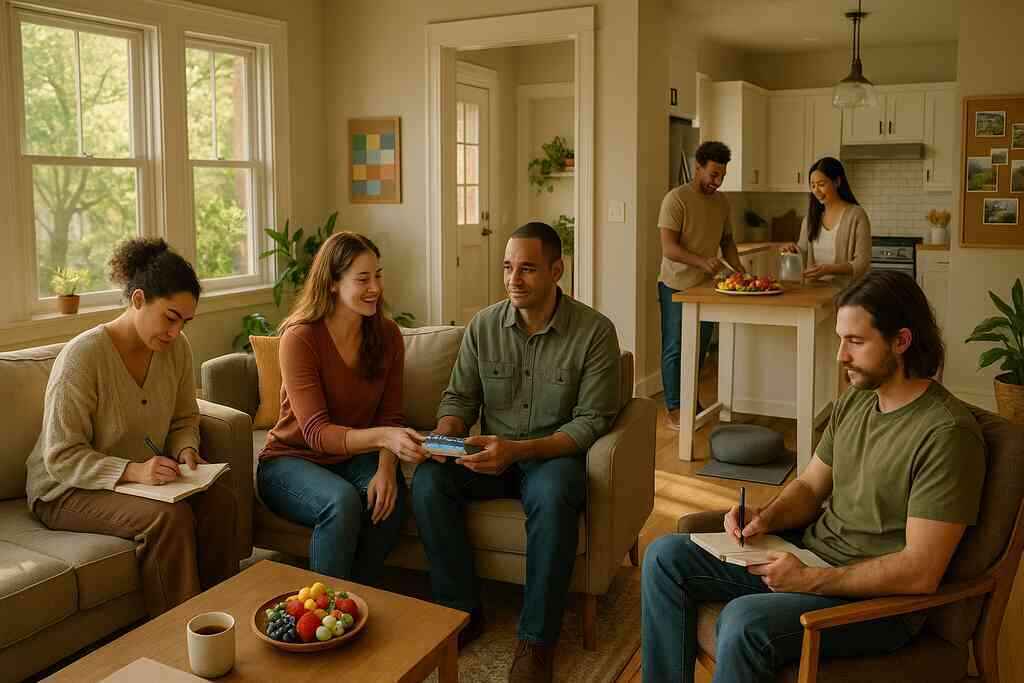
Healing extends inside the individual as well. Residents maintain holistic self-care rituals-from lavender aromatherapy at bedtime to balanced macronutrient meal prep. Sunday yoga eases muscle tension caused by past trauma, complementing cognitive behavioral therapy resources in sober living sessions. Parents notice calmer voices during phone calls, proof that inner nurture equals outer harmony. To dive deeper into successful engagement models, review our detailed piece on family integration models in sober living.
Relapse prevention plans integrating anxiety bipolar and opioid recovery tools
A relapse prevention worksheet without mental health components ignores half the battle. Top Sober House residents therefore craft plans incorporating panic-attack scripts, bipolar mood charts, and opioid craving rating scales. They identify early warning signs like racing thoughts or triggered memories, then assign interventions such as sensory grounding or emergency psychiatry calls. The process frames relapse not as failure but as a predictable risk that preparation can disarm.
Technology augments vigilance. Residents experiment with wearables tracking sleep variability because data often predicts mood shifts before behavior changes. When devices flag trouble, mentors schedule extra 12-step meetings addressing mental health and addiction that same day. Such proactive moves distinguish trauma-informed halfway houses for dual diagnosis from reactive programs. Linking science and self-awareness builds durable resilience indispensable for long-term sobriety with mental health stability.
Data driven outcomes for a sustainable recovery journey in Top Sober Homes
Accountability requires numbers, not just anecdotes. Top Sober House aggregates anonymous metrics on cravings, therapy attendance, and rule compliance across locations. Analysts compare these figures with county overdose rates to refine interventions continuously. Insights then inform policy updates, such as adding evening mindfulness when anxiety surges during winter months. This feedback loop exemplifies the evidence-based dual diagnosis treatment Ohio advocates demand.
Transparency empowers stakeholders. Clients view progress dashboards during goal-setting sessions, seeing concrete proof that integrated care plans in Ohio sober environments work. Insurance partners and local legislators also access blinded reports demonstrating cost savings from reduced hospitalizations. For a closer examination of benchmarks, browse our piece on urban Ohio success metrics for dual recovery. By broadcasting outcomes, Top Sober House invites accountability while celebrating every milestone residents achieve on their sustainable recovery journey.
Sustaining Serenity Beyond the Porch Light
Alumni support networks are lighting the path to long term sobriety and mental health stability
Graduates never leave the family; they simply change rooms within the Top Sober House continuum. Monthly alumni dinners gather peers who understand managing bipolar disorder and alcohol abuse in ordinary neighborhoods. Seasoned mentors discuss coping plans for holidays, work stress, and unexpected grief that can spark cravings. Because conversations remain peer driven, vulnerability feels natural, not clinical. Families can even search sober living accommodations nationwide to locate chapters when alumni move for new jobs.
Digital forums complement face to face gatherings. Alumni log daily gratitude lists, mood ratings, and sober milestones through a secure mobile portal. House managers review patterns and invite members to virtual coffee when anxiety trends upward. This proactive outreach mirrors data driven relapse forecasting tools used during residency, nurturing continuous accountability. As alumni mentor newcomers, they reinforce their own recovery journey while modeling hope.
Expanding access to safe transitional housing across Ohio
Recovery sometimes requires fresh scenery without abandoning community ties. Top Sober House therefore links graduates to safe transitional housing across Ohio’s suburbs, farms, and lake towns. These step-down homes soften the shift from house rules to fully independent living. Residents may keep curfews and drug testing while exploring employment or education in new regions. Such gradual autonomy reduces the shock that often triggers relapse for co-occurring disorders.
Partnerships with landlords ensure sober environment clauses remain legally protected within leases. Integrated mental health and addiction care Columbus clinicians provide telehealth to rural transitional units, preserving therapeutic continuity. Peer-supported co-occurring disorder housing in Cincinnati offers weekend workshops for residents considering similar expansions. By multiplying safe options, Ohio’s dual diagnosis sober living evolves into a statewide safety net. The network’s reach proves recovery can flourish anywhere determination meets structure.
Call to step into a sober house near you with confidence and courage
If you still wrestle with substance use disorder and racing thoughts, know you are not alone. Thousands have walked through Top Sober House porches uncertain, yet emerged with steady breath and clear purpose. The supportive environment for anxiety and opioid recovery you crave exists, complete with peer support and professional guidance. House managers stand ready to translate fear into action, explaining financial logistics and personalized plans. Reach out, tour a sober house near you, and picture a life where cravings no longer command.
Recovery begins the moment hope outweighs hesitation. By choosing Top Sober House, you embrace evidence-based care, compassionate companions, and practical tools for long-term sobriety. Whether you thrive in Cleveland, Dayton, or tiny river towns, someone will hold the lantern for your next steps. Accept the invitation, breathe deeply, and walk toward the porch light that never dims. Your integrated recovery story starts now, and the Top Sober House community is eager to witness it unfold.
Frequently Asked Questions
 Frequently Asked Questions
Question: How does Top Sober House weave integrated mental health and addiction care into its Ohio dual diagnosis sober living model?
Answer: Every Top Sober House location in Ohio operates on an integrated care blueprint that marries evidence-based psychiatric services with proven substance-use interventions. Upon move-in, residents receive a personalized plan co-authored by our on-staff clinicians and partnered outpatient dual diagnosis programs near Dayton and Columbus. The plan aligns therapy appointments, medication schedules, CBT worksheets, and 12-step meetings addressing mental health and addiction so that depression, anxiety, or bipolar swings are addressed the same day cravings surface. This unified approach-praised by integrated mental health and addiction care Columbus advocates-keeps residents from bouncing between disconnected providers and dramatically improves long-term sobriety with mental health stability.
Question: What trauma-informed features make Top Sober House a safe place for PTSD and substance abuse recovery?
Answer: Our Ohio trauma-informed halfway houses for dual diagnosis incorporate soft lighting, private reflection corners, predictable chore charts, and nightly grounding exercises. Staff are trained to recognize hyper-vigilance cues and can de-escalate flashbacks without triggering shame. Art therapy, yoga, and peer feedback circles transform fear into leadership while house rules remain flexible enough to accommodate late-night anxiety check-ins. Families searching for a supportive environment for anxiety and opioid recovery consistently choose these houses because the design reduces relapse triggers and nurtures genuine serenity.
Question: The Guide to Managing Dual Diagnosis in Top Sober House Ohio highlights peer mentorship-how are mentors and house managers prepared to support co-occurring disorders?
Answer: Within 48 hours of arrival, each resident is paired with an alumnus from our peer-supported co-occurring disorder housing in Cincinnati or Cleveland. Mentors model coping strategies-calling sponsors, using mindfulness apps, or scheduling extra 12-step meetings-while house managers back the process with quarterly training in motivational interviewing, suicide prevention, and cultural humility. This dual layer of professional coaching and real-life modeling accelerates skill uptake and builds the resilient community that Top Sober House Ohio resources for dual diagnosis are known for.
Question: How does Top Sober House balance strict house rules with medication management for residents managing bipolar disorder and alcohol abuse?
Answer: Sobriety and psychiatric stability both rank as non-negotiables. Breathalyzer checks and curfews protect the sober living environment, yet rules flex around lithium or antidepressant dosing. Secure lockboxes ensure safety, but residents have 24/7 access, so there’s never a missed dose that could spark mood swings or relapse. Weekly audits teach residents to track side effects and collaborate with prescribers, turning compliance into empowerment-crucial for managing bipolar disorder and alcohol abuse in sober housing.
Question: What post-residency supports keep alumni on a sustainable recovery journey after they leave Top Sober Houses in Ohio?
Answer: Graduation is only the midpoint of the recovery journey. Alumni gain lifetime access to monthly dinners, digital gratitude journals, and real-time mood-tracking dashboards that alert staff when relapse risks rise. For added structure, we connect graduates to safe transitional housing across Ohio complete with optional drug testing and telehealth sessions from our evidence-based dual diagnosis treatment partners. This continuum-from in-house care to community mental health partnerships with Top Sober House-ensures that confidence and courage remain high long after the porch light fades.