
How Does Top Sober House Foster Peer Triumph in Kansas
December 12, 2025
From Wheat Fields to Fresh Starts: The Spirit of Peer Triumph in Kansas
Why Kansas culture is fertile ground for sober companionship
Kansas towns thrive on shared harvests, potluck dinners, and porch-light hospitality, making peer support almost second nature. That sense of neighborly duty blends beautifully with the goals of sober homes that nurture people escaping alcohol addiction and drug abuse. Residents quickly discover that the same community spirit fueling football Fridays also fuels recovery Saturdays. When newcomers search for top sober house resources in Kansas, they usually want more than a bed; they want the supportive environment Kansas natives already value. Such cultural alignment reduces isolation in early recovery and accelerates bonding inside group homes and halfway houses.
Generations of farmers learned to weather droughts by leaning on one another, and that collective resilience now fortifies local sober living houses. Regular 12-step meetings in church basements complement practical chores on the property, mirroring each county’s work ethic. Because neighbors often know each other well, accountability feels organic rather than imposed. This natural vigilance helps protect the sober living environment from outside triggers and keeps house rules respected. Consequently, relapse rates drop as friendships rise, and residents of sober living homes witness peer triumph blossom like sunflowers across the plains.
Introducing Top Sober House as the catalyst for Midwest supportive sober housing
Top Sober House recognized Kansas’ collaborative spirit and designed a sober housing network that amplifies it. The organization curates top sober houses, top sober homes, and even the occasional sober house near you that perfectly fits the local culture. Each property is selected for its capacity to become a safe place where peer-guided recovery can flourish alongside structured routines. By featuring listings from Wichita to Dodge City, Top Sober House Kansas bridges urban and rural gaps in available recovery journey support.
Furthermore, the directory integrates outpatient program partners, rehab centers, and residential treatment center referrals, providing seamless handoffs for people transitioning out of inpatient treatment. This holistic approach ensures that individuals never feel abandoned between clinical services and community living. Instead, they land in a sober environment primed for mentorship, daily 12-step programs, and specialized treatment programs tailored to Midwest lifestyles. Families trust these curated options because each listing complies with state guidelines for sober living in regulated group settings.
The promise of a structured yet compassionate sober environment that Kansas residents can trust
Every Top Sober House property operates under clearly defined house rules crafted to protect long-term sobriety while honoring human dignity. A trained house manager resides on-site, modeling accountability and guiding residents through the daily routine-morning meditation, peer accountability check-ins, and scheduled chores. Such predictability lessens anxiety for people fresh out of inpatient treatment and reinforces healthy habits essential for sustained change. Meanwhile, compassionate community standards remind residents that recovery is relational, not punitive.
Kansas clients also appreciate the balance of independence and guidance that characterizes each sober living program. Curfews, substance testing, and attendance at support groups like Alcoholics Anonymous provide vital guardrails, yet residents still pursue jobs, studies, and creative goals. The safe environment becomes a launchpad rather than a cage, supporting progressive responsibility without removing protective oversight. Over weeks, individuals weave sober companionship into daily life, turning structured halfway housing into a vibrant network of lifelong friends who champion one another’s continued success.
Architecting the Kansas Sober Living Network
Mapping a lattice of Wichita sober living homes and Topeka drug-free sanctuaries
Wichita’s aviation corridors and college districts host multiple top sober houses that mirror the city’s industrious pulse. Each home offers separate male and female quarters, ensuring privacy while encouraging co-ed friendship during supervised activities. Residents share morning chores, evening 12-step meetings, and weekly accountability check-ins that cultivate peer triumph in early recovery. Nearby employers routinely contact house managers when job openings arise, strengthening community ties and economic stability. This reliable flow of work opportunities lowers relapse risk by replacing idle time with purpose.
Less than two hours away, Topeka presents quieter drug-free sanctuaries that suit clients seeking low-stimulus environments. These sober homes occupy tree-lined streets near the Capitol’s civic heart, making civic volunteering accessible. Clients plant vegetable plots, visit area museums, and attend trauma-informed yoga at partner studios. Such activities widen social circles while reinforcing sober companionship programs that Kansas families value. Transportation links between Wichita and Topeka properties allow residents to swap environments if clinical teams deem it therapeutic.
Uniting halfway houses and integrated outpatient and sober living services
Peer support thrives when clinical care flows smoothly into community living. Therefore, Top Sober House signs memoranda of understanding with regional rehab centers and outpatient programs. Discharge planners can reserve beds at partner sober homes before a client’s graduation day, eliminating housing gaps. Once admitted, residents continue therapy off-site three evenings each week, then process insights with housemates over coffee. This loop of professional feedback and peer reflection cements knowledge and normalizes vulnerability.
Kansas halfway house accountability also relies on digital dashboards that track attendance, medication compliance, and curfew adherence. House managers review records during nightly debriefs and highlight wins rather than solely flagging violations. Positive reinforcement aligns with evidence-based relapse prevention housing strategies, giving residents measurable goals. Integrated outpatient counselors receive secure updates, allowing for course corrections in real time. Everyone-clinicians, peers, and families-shares one vision of sustained sober success.
Accessible sober transport services for rural Kansas recovery seekers
Distance can derail recovery when meetings or therapy sit many miles away. Top Sober House counters that risk by deploying mobile transport teams across farm country. Minivans equipped with breathalyzers, first-aid kits, and Wi-Fi pick up residents for appointments, job interviews, or family visits. The service operates on a fixed donation model, removing financial barriers for low-income clients. Riders often use windshield time to practice step work or rehearse coping scripts with peers.
Collaboration with local sheriff departments ensures vehicles can reach outlying gravel roads even during storm season. Neighbors along the routes volunteer driveways as safe rendezvous points, proving that Kansas community spirit never stops at city limits. By shrinking the geographic gap, Top Sober House keeps rural members connected to the same sober environment that Kansas urbanites enjoy. That continuity of care prevents isolation and reinforces statewide group resilience and sober housing goals.
Coordinating faith-based and evidence-based options under one Kansas City umbrella
Kansas City straddles state lines, making it a strategic hub for diverse recovery philosophies. Top Sober House therefore curates both church-affiliated sober homes and secular therapeutic residences within the metro. A shared referral portal lets clinicians and clergy “shop” for open beds that match each client’s spiritual or clinical profile. Users can instantly find sober living options near Kansas City without scrolling endless lists.
Monthly roundtables bring chaplains, cognitive-behavioral therapists, and peer coaches together for cross-training. Participants compare sermon-based moral inventories with dialectical behavior skills, discovering overlap rather than competition. Residents reap the benefits by customizing their recovery journey-attending morning devotionals, afternoon skill groups, and evening AA meetings near Wichita streamed online. Unified calendars also avoid scheduling conflicts, ensuring every resident can maintain a balanced daily routine without stress. By embracing pluralism, the Kansas City sober community support model honors personal belief systems while grounding everyone in proven relapse-interruption methods.
 Daily Engines of Peer-Guided Recovery
 Daily Engines of Peer-Guided Recovery
House manager leadership training that models accountability
Every top sober house in Kansas assigns an experienced house manager as the on-site captain. Their leadership training begins before residents move in and continues through monthly certification workshops. Curriculum covers conflict de-escalation, motivational interviewing, and evidence-based enforcement of house rules. Kansas managers also study agricultural-coop governance models, mirroring the cooperative spirit residents already understand. This blend of professional skill and local tradition builds immediate trust inside sober living houses.
Practical drills reinforce the training. Managers practice room inspections, emergency drills, and compassionate confrontation until muscle memory forms. Senior directors observe sessions and give corrective feedback using measurable standards. Graduates then shadow seasoned leaders at Wichita sober living homes before receiving their own keys. The apprenticeship model guarantees continuity when staff turnover occurs, keeping each sober environment in Kansas residents depend on stable.
Peer accountability meetings and community-driven 12-step mentorship
Formal peer accountability meetings happen every evening after dinner. Residents sit in a circle, review daily victories, and identify potential triggers without judgment. A rotating facilitator reads the agenda, ensuring everyone speaks within respectful time limits. Notes become action items posted on the communal bulletin board for transparent follow-up. This ritual normalizes vulnerability and sharpens listening skills essential for group homes practicing peer-guided recovery Kansas appreciates.
After meetings, residents break into sponsor pairs for community-driven 12-step mentorship. Seasoned alumni return weekly to coach newcomers through step work worksheets. Many mentors first connected through local AA meetings near Wichita, strengthening cross-campus camaraderie. When questions arise about sponsor boundaries, managers reference the peer support in sober houses to preserve integrity. The combined structure builds confidence and maintains long-term sobriety momentum across the Kansas sober living network.
Trauma-informed sober residence protocols woven into the daily routine
Many residents carry trauma histories intertwined with alcohol addiction or drug abuse. Top Sober House embeds trauma-informed care principles into every corner of the daily routine. Morning meditation includes grounding exercises that stabilize nervous systems before chores begin. Lighting choices, wall colors, and furniture layouts follow sensory-sensitive guidelines vetted by clinical consultants. These design tweaks transform sober homes into safe places where healing can proceed without unnecessary triggers.
Staff members receive training on trauma reactions, ensuring compassionate responses during flashbacks or dissociation. Private debrief rooms stay available around the clock, allowing residents to self-regulate away from communal areas. Weekly workshops teach somatic breathing, art therapy, and journaling, complementing standard 12-step programs. The protocols align with national recommendations for substance use disorder treatment, enhancing credibility. Residents feel seen rather than pathologized, increasing retention rates and group resilience in sober housing outcomes.
Structured sober environment Kansas clients rely on for relapse interruption
Predictability disrupts cravings by replacing chaos with clear expectations. Each top sober house posts a color-coded schedule covering wake-up, meals, chores, study time, and lights-out. Curfews and random substance testing reinforce seriousness without feeling punitive when communicated transparently. Residents sign personal goal sheets each Sunday, linking privileges to progress. The scaffold transforms short-term intentions into sustainable habits supporting long-term sobriety pathways that Kansas families cherish.
External professionals strengthen the structure by holding therapy and career coaching on-site. Clients step from counseling straight into peer-driven chores, cementing insights through action. Digital check-in kiosks record attendance and flag concerning patterns before relapse escalates. Counselors access reports securely, enabling real-time intervention aligned with structured halfway housing framework best practices. Together, technology, human oversight, and peer perseverance create a firewall against the revolving door of chronic addiction.
Holistic Layers That Cultivate Group Resilience
Farm-to-table sober nutrition program energizing early recovery
Seasonal produce grown in Kansas soil becomes the first lesson in self-care for residents of the top sober houses. House gardens burst with spinach, tomatoes, and herbs, offering hands-on therapy that doubles as mindful movement. Residents plan menus together, reinforcing peer triumph in early recovery while respecting individual dietary needs. Every harvest day ends with a communal meal, where gratitude lists replace old drinking rituals. The practice nurtures group resilience sober housing aims to protect.
Nutrition workshops follow each planting cycle. A local dietitian explains how stable blood sugar steadies mood swings that can spark cravings. Residents learn quick recipes they can recreate after graduation, anchoring long-term sobriety pathways. Because chores rotate, everyone gains kitchen confidence and leadership skills. The farmhouse atmosphere transforms the sober living environment into a safe place that tastes like home.
Substance use disorder peer coaching fused with holistic wellness practices
Peer coaches in Kansas sober living homes pair cognitive techniques with yoga, breathwork, and light cardio. The blend keeps learning embodied rather than abstract, which accelerates habit change. Coaches demonstrate relapse-interruption scripts right after stretching sessions, so new neural pathways cement quickly. Residents then journal insights, creating a feedback loop rooted in both mind and body. Such fusion defines the peer-guided recovery Kansas communities celebrate.
Workshops also explore nature walks, grounding exercises, and art therapy. Coaches reference motivational interviewing to personalize each plan, respecting trauma-informed sober residence protocols. The curriculum mirrors findings from integrating peer networks for sobriety while remaining locally flavored. Consequently, residents experience comprehensive care without leaving the property. Wellness becomes a daily routine rather than an occasional treat.
Family-inclusive recovery Kansas families can actively support
Weekly family circles invite loved ones into the structured sober environment Kansas residents rely on. Trained facilitators guide conversations that rebuild trust, set boundaries, and celebrate micro-victories. Parents and partners practice communication tools that complement residents’ 12-step work, reducing mixed messages. Children join age-appropriate play groups, normalizing sobriety as a family value. This inclusive design deepens accountability beyond house walls.
Educational webinars address enabling behaviors and co-occurring stress patterns. Relatives access resource packets covering local counseling, childcare, and budgeting tools. The program aligns with family-inclusive recovery in sober homes to ensure evidence-based content. Consequently, households become extensions of the sober environment rather than relapse triggers. The ripple effect strengthens community health across the Sunflower State.
Alumni-led support groups sustaining co-ed sober living momentum
Graduates return every month to facilitate peer accountability meetings and share job-search hacks. Their presence offers living proof that Kansas relapse prevention housing works beyond move-out day. New residents hear real-world success stories, which boosts hope and reduces early-recovery anxiety. Alumni also organize softball games and service projects, keeping camaraderie alive without substances. These activities reinforce co-ed sober living Kansas programs.
Mentors collaborate with house managers to track milestones and refine house rules. Data collected informs future training and policy tweaks. Insights often align with research on success factors for long-term sobriety paths, adding scholarly weight to lived experience. Over time, alumni networks evolve into statewide employment and housing pipelines. This cycle of giving back transforms group homes into perpetual engines of sober success.
Sustaining Momentum Across the Sunflower State
Kansas relapse prevention housing and long-term sobriety pathways
Relapse prevention begins with choosing the right property, and the sober living homes in Kansas directory makes that decision easier. Each top sober house listed there offers clear house rules, onsite peer support, and an alcohol-free daily routine that replaces chaos with calm. Residents of sober living homes practice coping skills learned in treatment programs while enjoying the supportive environment that Kansas culture provides. Because cravings often spike during early recovery, every property embeds 12-step meetings and mindful movement classes into weekly schedules. These layers create a sober environment that strengthens long-term sobriety without isolating people from real-world responsibility.
Top sober houses also nurture individualized relapse plans that evolve with progress. House managers review triggers, emergency contacts, and self-soothing tactics during regular check-ins. When a resident encounters unexpected grief or job stress, the team quickly adapts curfews or schedules extra support groups. This flexibility honors personal dignity while protecting community safety. Consequently, individuals learn to navigate alcohol abuse or drug abuse memories without abandoning their recovery journey. Over time, sustained practice turns relapse prevention strategies into automatic life skills.
Graduated levels of care from inpatient treatment handoffs to outpatient program synergy
Momentum stalls if care gaps appear, so Top Sober House designs smooth handoffs from residential treatment centers to sober living houses. Discharge planners coordinate bed dates, transportation, and medication refills before clients leave inpatient treatment facilities. Once settled, residents attend an outpatient program three evenings weekly, then process insights with peers over coffee. This rhythm keeps clinical accountability high while promoting the peer-guided recovery Kansas communities value. Structured transitions reduce the shock that often fuels relapse after highly monitored care ends.
Technology further cements synergy between services. Secure dashboards allow rehab centers and outpatient counselors to monitor attendance, employment milestones, and 12-step program participation in real time. Alerts trigger supportive texts rather than punitive calls, preserving trust. Residents appreciate the transparent system because it feels like a safety net rather than surveillance. As accountability travels with them, they experiment with new freedoms-part-time work, college classes, or volunteer roles-without risking sobriety. Graduated support ultimately positions them for autonomous, substance-free lives.
Emerging house rules evolutions enhancing rural Kansas sober housing access
Rural counties once lagged in sober housing, but Top Sober House now pilots flexible guidelines tailored to farm schedules and long travel distances. Curfews adjust during harvest season, acknowledging residents who operate combines late into the night. House managers use video calls to conduct room checks for those lodged on distant acreage, protecting the safe environment without forcing disruptive commutes. Such adaptive house rules honor local livelihoods while upholding sobriety standards that deter alcohol addiction relapse.
Regional collaboration has also sparked transport stipends and remote therapy pods. Minivans shuttle residents to support groups in towns forty miles apart, and telehealth booths connect them to licensed counselors. These innovations emerged after listening sessions with county officials and alumni who understand the isolation of prairie life. Because the program remains data-driven, new policies face quarterly review; ineffective measures are dropped, and successful ones become statewide templates. The result is equitable access to sober living in every Kansas zip code.
Group homes evolving into lifelong networks of sober companionship
Kansas group homes rarely dissolve once residents graduate; instead, they transform into enduring friendship circles that span counties. Alumni host virtual check-ins, organize holiday potlucks, and carpool to NA meetings across Kansas to welcome newcomers. These activities extend the sober living program’s protective embrace far beyond official move-out dates. People who once feared isolation now enjoy a robust network of sober companionship that counters social triggers linked to substance use disorder.
Peer support grows even stronger through service projects. Alumni paint community centers, mentor teens facing alcohol abuse, and speak at local colleges about sustaining sobriety principles. Shared service cements purpose, reinforcing identity shifts from “person in recovery” to “community leader.” When setbacks occur, the network responds swiftly with meal trains, emergency childcare, and extra meeting rides. Such reciprocity embodies the sunflower’s symbolism-turning toward collective light-and proves that recovery, once rooted, can flourish for a lifetime.
Toward a Shared Horizon of Sober Success
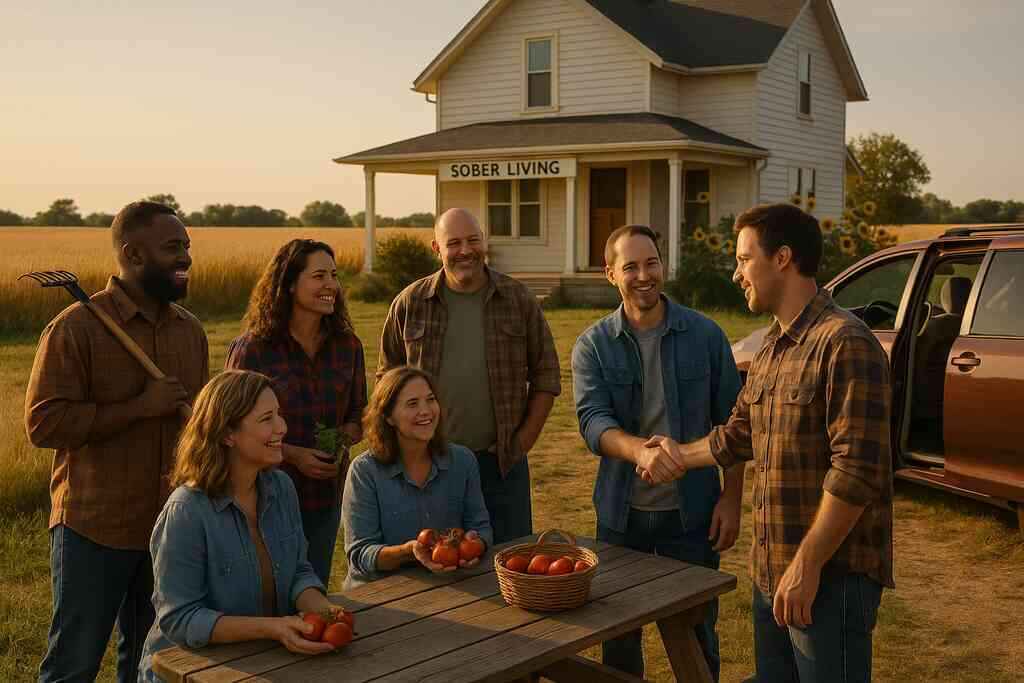 Toward a Shared Horizon of Sober Success
Celebrating peer triumph through community storytelling and milestones
Story nights crackle with hope inside every Top Sober House common room. Residents pass a talking stick while recounting challenges and victories from their recovery journey. Each narrative becomes living proof of peer triumph in early recovery across the Kansas sober living network. Milestone boards display new jobs, rekindled family ties, and ninety sober days, celebrating group resilience sober housing inspires. Stories then travel beyond state lines, encouraging the sober homes in the Nebraska network to replicate Kansas’ success.
Recognition ceremonies amplify momentum in a safe environment. House managers distribute handcrafted sunflower tokens that mark thirty, sixty, and yearly milestones toward long-term sobriety. Friends form cheering tunnels, proving Kansas community spirit rivals any stadium roar. Afterward, mentors escort honorees to AA meetings near Wichita where chips reinforce new identities. These layered celebrations strengthen neural associations, making sober living program habits emotionally rewarding.
Inviting readers to locate a top sober house near you for the next step of the recovery journey
Momentum flourishes when readers move from inspiration to concrete action. Top Sober House offers a user-friendly locator that highlights a top sober house near you within seconds. Filters reveal house rules, peer support intensity, and proximity to employers, ensuring a perfect supportive environment match. Kansans contemplating relocation can even compare homes with sober living listings near Oklahoma to gauge regional culture fits. The transparent process reduces anxiety and accelerates the next confident step of the recovery journey.
Once a property feels right, click reserve and receive guidance from intake specialists trained in professional addiction care. They outline transportation, financial planning, and integration with outpatient program schedules, forming a structured sober environment that Kansas residents trust. Virtual consultations link newcomers to professional addiction treatment services online for any remaining clinical needs. By uniting digital assistance with hometown hospitality, Top Sober House proves that recovery help always stands within reach. Accept the invitation, pack hope, and join a community already marching toward a shared horizon of sober success.
Frequently Asked Questions
Question: How does Top Sober House ensure that its Kansas sober living network provides peer-guided recovery and real accountability for residents?
Answer: Every top sober house in Kansas lists in our directory follows a layered model that blends clearly written house rules, on-site house manager leadership, and community-driven 12-step mentorship. Residents enter a structured sober environment Kansas families can trust: color-coded daily schedules, random substance testing, mandatory peer accountability meetings, and required attendance at alcoholics anonymous or comparable support groups. Because these sober living houses are linked digitally, a missed curfew in Wichita or Topeka automatically notifies the regional team, reinforcing Kansas halfway house accountability without feeling punitive. The result is a seamless Kansas sober living network where peer support, evidence-based routines, and professional oversight all pull in the same direction-long-term sobriety and peer triumph in early recovery.
Question: What unique role do house manager leadership training and peer accountability meetings play in sustaining peer triumph in early recovery across Wichita sober living homes?
Answer: House managers are the heartbeat of the peer-guided recovery Kansas residents experience. Before receiving keys to any Wichita sober living homes, managers graduate from a certification course covering conflict de-escalation, motivational interviewing, trauma-informed sober residence protocols, and Midwest supportive sober housing culture. Their training ensures rules are enforced with empathy, not punishment. Each evening, the manager oversees peer accountability meetings where residents celebrate wins, identify triggers, and assign action items. This real-time feedback loop turns group homes into live classrooms for relapse prevention, making every resident both teacher and learner. Over time, the process creates group resilience sober housing is famous for and cements the house manager as a trusted mentor rather than a warden.
Question: In the blog How Does Top Sober House Foster Peer Triumph in Kansas, you mention a structured sober environment that Kansas clients rely on. What does that structure look like day to day?
Answer: Structure starts at sunrise with guided meditation, followed by farm-to-table breakfast chores that reinforce sober nutrition habits. Residents then leave for work, class, or outpatient program sessions, returning by a posted curfew. Afternoons include substance use disorder peer coaching, trauma-informed yoga, or career workshops, all held inside a safe environment. Evenings feature community-driven 12-step mentorship, house dinner, and the mandatory peer accountability circle. Digital kiosks log attendance for therapists and rehab centers, ensuring integrated outpatient and sober living synergy. By nightfall, everyone completes a gratitude list before lights-out. This predictable rhythm replaces chaos with purpose, giving residents of sober living homes the confidence to stack sober days into sober decades.
Question: How are family-inclusive recovery programs integrated with outpatient treatment and alumni-led support groups to create long-term sobriety pathways?
Answer: Family-inclusive recovery Kansas style begins with weekly circles where loved ones learn boundary-setting and relapse-interruption skills alongside residents. These sessions sync with each resident’s outpatient program schedule so clinical insights translate straight into household communication. Once residents graduate, alumni-led support groups step in, inviting families to softball games, service projects, and milestone celebrations. This continuous hand-off from inpatient treatment to outpatient therapy to alumni engagement keeps everyone-resident, relatives, and peers-invested in the same long-term sobriety pathway. Data show that involvement of family and alumni together cuts relapse risk dramatically, turning Kansas relapse prevention housing into a launchpad for lifelong wellness.
Question: I live in a rural county; how does Top Sober House address rural Kansas sober housing access, including transport and faith-based or evidence-based options?
Answer: Top Sober House deploys accessible sober transport services-Wi-Fi-equipped vans that collect residents on gravel roads and deliver them to therapy, meetings, or job interviews. Curfews adapt during harvest season, and video check-ins keep house managers connected to residents working late in the fields. Our directory also filters for faith-based sober options Kansas churches sponsor and secular evidence-based residences, allowing you to choose the philosophy that fits your recovery journey. Telehealth pods on-site provide counseling, and partnerships with local sheriffs ensure safe travel during storms. These innovations guarantee that rural Kansans enjoy the same supportive environment and peer triumph opportunities as city dwellers, proving that distance is no longer a barrier to sunflower state sober success.