
How Top Sober House Reimagines Peer Support in Iowa 2026
January 26, 2026
Prelude to a Cornfield Renaissance
From halfway houses to smart sober homes mapping the evolution
Iowa’s recovery landscape once revolved around modest halfway houses where personal grit mattered more than structured guidance. Residents followed basic house rules, attended occasional support groups, and hoped for the best. While many succeeded, others slipped when rural isolation amplified cravings and boredom. Research into the role of halfway houses in recovery shows these venues provide safety but rarely offer holistic, tech-informed care. Acknowledging those gaps paved the way for today’s innovative peer support in Iowa sober living, where accountability meets customization.
The twenty-first-century response involves transforming old farmsteads into smart sober homes equipped with biometric locks, telehealth kiosks, and community gardens. Such environments weave trauma-informed routines into daily life while respecting Midwestern pragmatism. Residents monitor progress through wearable devices that sync with counselors in real time. Forward-thinking operators now adopt 2026 smart house rules for recovery to ensure consistency across group homes statewide. As technology integrates seamlessly, long-term sobriety becomes less about willpower and more about data-guided lifestyle redesign.
Why rural Hawkeye communities demand innovative peer support
Life in smaller Iowa towns brings tight-knit relationships, yet it can also magnify stigma when someone confronts substance use disorder. Trusted neighbors often double as church elders or employers, complicating privacy for individuals seeking help. Transportation deserts add another barrier, forcing residents to drive hours for outpatient programs or twelve-step meetings. Innovative peer support models now bridge those gaps by delivering mobile counseling vans, satellite Wi-Fi hubs, and virtual alumni groups directly to county seats. This inclusive sober living for rural Iowans ensures no farmhand, teacher, or retiree slips through the cracks.
Community engagement further distinguishes modern Iowa sober homes’ success stories. House managers collaborate with local co-ops to organize farm-to-table wellness events that normalize recovery discussions. Residents host alcohol-free social nights at high-school gyms, attracting families curious about harm reduction housing partnerships. According to early recovery insights on Iowa, these grassroots activities boost retention rates by fostering purpose beyond abstinence. The result is a supportive environment where personal victories ripple outward into healthier, more resilient townships.
Top Sober House directory as the digital gateway to hope
Finding peer-led recovery housing solutions once meant scanning bulletin boards or relying on word of mouth. Today, one intuitive platform accelerates the search process: the Top Sober House peer-led directory 2026. Its map-based interface lists licensed halfway houses, smart sober homes, and faith-friendly residences across all 99 counties. Filters for gender, veteran status, and LGBTQ inclusivity empower families to compare options quickly. In minutes, users shift from overwhelm to action, confident they have verified details at their fingertips.
Beyond listings, the portal offers quizzes that match newcomers with evidence-based sober living programs. Residents can also search sober living homes near you online to review house manager credentials, technology-enhanced recovery check-in protocols, and scholarship opportunities for financial assistance. Interactive webinars demystify concepts like trauma-informed care and peer recovery coach certification Iowa advocates now champion. By merging convenience with credible guidance, Top Sober House positions every Iowan to launch a successful recovery journey within a supportive, digitally connected network.
Building Sustainable Sobriety Support Ecosystems
Inclusive sober living for rural Iowans bridging transportation gaps and broadband deserts
Reliable transit remains the first hurdle for many residents of Iowa’s gravel-road hamlets. Inclusive sober living for rural Iowans begins when Top Sober House collaborates with county transit boards, farm bureaus, and volunteer driver networks. Vans equipped with breathalyzer ignition systems shuttle residents to medical appointments, job interviews, and regional support groups. Families researching dependable transportation solutions often start by exploring sober living options in Iowa because the directory highlights houses that guarantee mileage stipends or ride-share vouchers. This pragmatic safety net helps newcomers keep outpatient commitments, maintain employment, and stay accountable during early recovery.
Broadband deserts once isolated farmsteads from virtual counseling and online alumni groups. Today house managers install solar-powered Wi-Fi repeaters that beam a strong signal across cornfields and cow pastures. Virtual reality mindfulness classes stream seamlessly, allowing residents to practice stress-management skills without leaving the acreage. Remote job-training portals connect sober adults to telework roles, proving that geographic isolation no longer dictates economic opportunity. By uniting transportation aid with digital inclusion, Top Sober House crafts a supportive environment where every address-no matter how remote-hosts a vibrant recovery journey.
Farm-to-table wellness and trauma-informed house rules
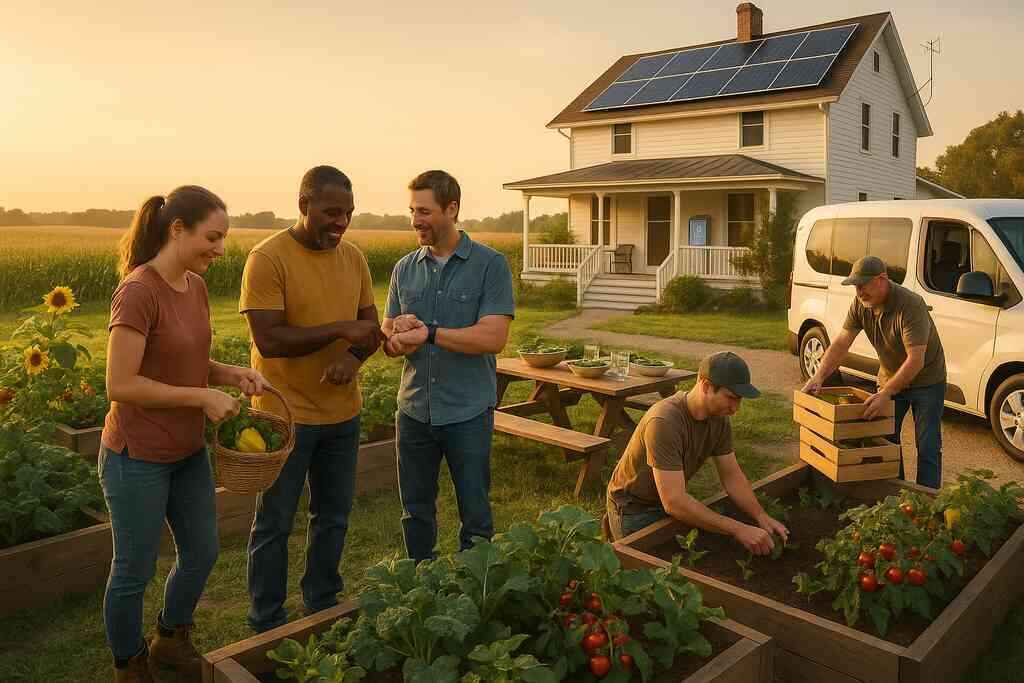
Nutrition shapes mood, cognition, and relapse resilience, so Iowa sober homes turn heirloom soil into therapeutic classrooms. Residents cultivate pesticide-free vegetables, barter surplus zucchini with neighbors, and learn to read nutrition labels just as carefully as they track cravings. Weekly meal-prep circles blend culinary skills with peer support, teaching that a balanced plate can stabilize blood sugar and curb late-night alcohol cravings. Fresh produce also lowers grocery bills, ensuring that even scholarship recipients enjoy equitable access to wholesome meals. Shared labor in the garden strengthens interpersonal trust, an essential ingredient in any sustainable sobriety support ecosystem.
While farm chores introduce structure, trauma-informed house rules soften that structure with empathy. Curfews, chore charts, and phone-free hours anchor daily routine without slipping into punitive control. House managers receive training on adverse childhood experiences, helping them redirect conflict through calming techniques rather than harsh penalties. Residents complete reflection worksheets that spotlight how past wounds influence present reactions, transforming rules into teachable moments. This blend of clear expectations and compassionate enforcement nurtures psychological safety, allowing each resident to rewrite their personal narrative.
Technology-enhanced recovery check-ins and digital accountability tools
Biofeedback wristbands now replace sporadic, handwritten mood logs. Every morning the wearable uploads sleep quality, heart-rate variability, and location data to a secure dashboard. House managers review real-time insights during brief digital check-ins, catching stress spikes before they balloon into cravings. Residents welcome the objectivity because it shifts conversations away from blame and toward actionable metrics. Detailed analytics also inform individualized relapse-prevention plans, proving that data can deepen, not replace, human connection.
Sophisticated dashboards draw on predictive algorithms described in the data-driven relapse prediction guide. When the system detects risk patterns, it sends discreet prompts inviting residents to schedule extra mindfulness sessions or peer-mentor calls. The proactive alert feels like a caring tap on the shoulder rather than digital surveillance. Over time, residents learn to interpret their own biometric cues and self-deploy coping strategies. Thus, technology evolves from novelty to an indispensable guardian of long-term sobriety.
Peer recovery coach certification and house manager leadership training
Top Sober House views leadership as a skill set that can and must be taught. Aspiring peer recovery coaches complete a standardized curriculum covering motivational interviewing, boundary setting, and crisis de-escalation. Scholarships offset tuition, reflecting the organization’s belief that lived experience should never be a financial burden. Newly certified coaches then shadow veteran staff, translating classroom theory into authentic, on-the-ground mentorship. This pipeline ensures residents always encounter guides who blend professional rigor with personal relatability.
House managers follow a separate leadership track based on cooperative governance principles explored in the peer-led governance models in the Michigan article. Workshops emphasize equitable decision-making, transparent budgeting, and restorative justice conflict resolution. Managers learn to delegate authority to resident committees, fostering buy-in while preventing burnout. Quarterly performance reviews focus on developmental feedback rather than punitive scoring. When leadership thrives at every level, the sober living environment becomes a living laboratory for community empowerment.
Evidence-based guidelines that transform halfway house culture
Decades of research reveal which environmental variables most influence relapse; Top Sober House distills those findings into practical guidelines. Bedrooms meet square-footage standards that reduce crowding stress, and communal areas feature soft lighting to lower cortisol. Daily schedules integrate evidence-backed micro-interventions such as gratitude journaling, five-minute breathing drills, and structured exercise. These seemingly small details converge to form a macro impact, shifting halfway houses from basic shelter to transformative healing hubs. Residents feel the difference within days, often describing the atmosphere as hope made tangible.
Continuous improvement drives policy evolution, and staff routinely consult findings highlighted in the future of support systems articles. Feedback loops involve anonymous surveys, sprint-style focus groups, and external accreditation audits. When data suggest a rule hampers autonomy, leadership tests alternative approaches in pilot houses before statewide rollout. This iterative, participatory method keeps guidelines fresh, relevant, and person-centered. Ultimately, evidence and empathy merge, ushering Iowa’s halfway houses into a new era of dignity-infused recovery.
 Community Reintegration and Workforce Development
 Community Reintegration and Workforce Development
Midwest recovery peer mentorship meets local employers
Community reintegration begins when Midwest recovery peer mentorship moves beyond inspiration and enters the regional job market. Iowa sober living community networks host weekly career workshops where alumni describe transforming halfway house culture into dependable work habits. Local manufacturers value this accountability because residents already practice strict house rules and punctual routines. Human resource directors tour group homes, observe digital sobriety accountability tools in action, and recognize excellent workforce development for residents. This face-to-face exchange replaces stigma with respect, opening doors to sustainable positions that fund long-term sobriety.
Mentors coach newcomers on résumé phrasing that highlights leadership roles earned during peer recovery coach certification in Iowa classes. Mock interviews reinforce confident eye contact, clear speech, and concise narratives about substance use disorder recovery. Employers appreciate transparent communication and often assign resident mentors as shift captains to encourage team cohesion. These Iowa sober homes’ success stories travel quickly through chambers of commerce, motivating additional companies to partner. Innovative peer support in Iowa sober living thus accelerates economic revitalization while protecting fragile early recovery.
College student and veteran recovery housing initiatives
Not every resident seeks factory work; some pursue degrees or service-related careers instead. College student sober housing in Iowa programs ally with campus disability offices to secure quiet study zones and sober social clubs. Professors share syllabi early, enabling house managers to embed assignment deadlines into daily routine calendars. Veteran recovery housing initiatives synchronize with the Veterans Health Administration to deliver trauma-informed counseling on site. This combined educational pathway demonstrates that sustainable sobriety support ecosystems embrace both intellectual curiosity and military discipline.
The same network offers women-focused sober living Iowa cottages where single mothers access childcare during evening classes. Sober living financial assistance in Iowa scholarships cover tuition gaps, textbooks, and bus passes between dorms and outpatient clinics. Digital accountability tools notify academic advisors if attendance slips, allowing quick intervention before relapse risk escalates. Residents celebrate milestones at house dinners, reinforcing community reintegration sober programs through shared pride. Every diploma or promotion proves that peer-led recovery housing solutions nurture unlimited potential.
Faith-friendly and LGBTQ inclusive recovery homes under one network
Spiritual traditions and gender identities once divided recovery communities; today, Top Sober House unites them under one welcoming roof. Faith-friendly sober living spaces host ecumenical meditation mornings alongside optional Bible study circles. Down the hallway, LGBTQ inclusive recovery homes display pride flags and offer confidential ally mentoring. Respectful coexistence grows because trauma-informed sober housing Iowa policies prioritize belonging over doctrine. Residents therefore practice empathy daily, strengthening resilience against alcohol abuse triggers.
House manager leadership training teaches staff to balance scriptural references with inclusive language, preventing microaggressions and moral judgments. Evidence-based sober living guidelines require consent before prayer circles and guarantee private areas for hormone therapy storage. Smart house rules for sober homes also restrict gendered chore assignments, promoting equitable responsibility. Frequent town-hall meetings let residents propose amendments, embodying cooperative governance. This intentional design fosters peer support that mirrors the diverse society awaiting graduates.
Alcohol-free social events and harm reduction housing partnerships
Friday nightlife no longer belongs solely to bars; alcohol-free social events in Iowa communities host barn dances, poetry slams, and sunset kayak tours. Sober houses coordinate transportation solutions, ensuring rural residents reach gatherings without driving unfamiliar roads. Iowa harm reduction housing partners contribute naloxone training booths, reinforcing safety even during celebratory moments. Local musicians donate performances, attracted by the event’s positive energy and dependable audience. These gatherings normalize abstinence while demonstrating joy outside intoxication.
Event planning committees pull from grassroots addiction recovery movements, weaving resident feedback into playlists, crafts, and menu choices. Attendees learn about peer-led governance, technology-enhanced recovery check-ins, and farm-to-table wellness in sober homes. Surrounding neighborhoods witness inclusive sober living for rural Iowans operating in real time, reducing fear and misunderstanding. Sponsor booths advertise on-the-job apprenticeships, blending recreation with workforce prospects. Each festival becomes a living resume that showcases transformed lives and community value.
Aftercare continuity planning with twelve-step integration and outpatient programs
Recovery does not conclude at move-out; detailed aftercare continuity planning begins weeks before departure. Case managers map individualized routes through outpatient clinics, telehealth portals, and local twelve-step meetings. They also coordinate cross-border referrals to recovery housing in Nebraska for residents relocating near family farms. Such foresight supports maintaining long-term sobriety, whether someone stays in Iowa or continues neighboring journeys. Consistent contact prevents isolation, which research names a top relapse predictor.
Twelve-step integration in modern housing remains flexible, encouraging residents to explore secular alternatives if doctrine discomfort arises. Peer mentors supply rides to beginner meetings and explain sponsorship etiquette, easing anxiety. Outpatient program liaisons share progress notes with house staff, creating a transparent loop that flags emerging concerns quickly. This layered safety net exemplifies transforming halfway house culture into enduring wellness architecture. Graduates leave knowing support follows them like a trusted shadow, not a restrictive leash.
Harvesting Hope
Grassroots addiction recovery movements fueling long-term sobriety
Grassroots addiction recovery movements now sprout like prairie wildflowers across Iowa cornfields. Neighbors form kitchen-table action circles, sharing relapse-prevention recipes and ride schedules. County librarians host podcast clubs that dissect neuroscience articles into friendly conversation. These hyperlocal gatherings complement clinical treatment without replacing professional guidance. Together they weave an unbreakable social fabric that cushions every slip and magnifies every milestone.
Volunteers also track outcomes, proving that supportive friendships dramatically advance maintaining long-term sobriety. Data dashboards display days abstinent, employment gains, and mood trends, fostering healthy competition among counties. When a metric dips, mentors deliver mindfulness walks or instant tele-support before risk snowballs. This nimble feedback loop proves everyone owns a piece of community resilience. Consequently, rural sobriety transforms from solitary struggle into celebrated collective achievement.
Transforming personal recovery journeys into collective agency
One resident might arrive carrying shame, yet soon discovers storytelling circles that convert secrets into communal strength. These circles encourage structured vulnerability, guiding participants to translate pain into policy proposals. When someone describes lost wages during detox, the group drafts employer education materials. Another’s account of prescription misuse sparks pharmacy outreach campaigns. Through this process, individual recovery journeys butterfly into collective agency.
Midwest recovery peer mentorship acts as the engine that powers these grassroots policy wins. Mentors train residents to testify at city council hearings and track budget allocations. They practice concise talking points during morning check-ins, blending lived experience with data literacy. Community reintegration sober programs also partner with journalism students, ensuring stories reach local papers and agricultural podcasts. Each public victory boosts confidence, which circles back to fortify personal relapse-prevention plans.
Scaling peer-led recovery housing solutions across all 99 counties
Scaling peer-led recovery housing solutions begins with mapping existing Iowa sober homes’ success stories onto a statewide blueprint. Data analysts identify common threads in thriving houses, such as trauma-informed routines and flexible rent subsidies. Regional summits then invite county supervisors, credit unions, and cooperative extension agents to replicate those elements. Pilot grants seed new houses near meat-packing hubs and university towns simultaneously. This intentional rollout prevents the usual urban bias, guaranteeing equitable access across all 99 counties.
The initiative also studies neighboring models, including sober living support in Minnesota to borrow cold-weather design tips. Engineers adapt geothermal heating so winter utility costs stay manageable for low-income residents. House managers exchange curriculum through encrypted peer portals, accelerating adoption of evidence-based routines. State accreditation teams perform quarterly visits, offering encouragement instead of punitive audits. Through shared learning, each county evolves quicker than any could alone.
From safe places to thriving communities Top Sober House vision is beyond
Top Sober House views every residence as a seedbed, not a bunker. Safe places offer immediate refuge, yet the long game demands thriving communities that nurture purpose. Therefore, house designs incorporate coworking lofts, art studios, and pollinator gardens open to neighbors. Monthly open-house tours demystify recovery and spark volunteer projects, from mural painting to compost pickup. By blurring property lines, the organization transforms protected spaces into celebrated civic landmarks.
Civic planners notice and begin embedding sober living transportation solutions and wellness hubs into zoning ordinances. Public parks now feature discreet QR codes linking to crisis lines, reinforcing digital sobriety accountability tools. Over time, these coordinated efforts yield measurable drops in overdose calls and unemployment claims. Residents become mentors, entrepreneurs, and school board members, proving recovery enriches the whole county. Such momentum propels Top Sober House toward its ultimate mission of planting hope until it becomes a regional culture.
Frequently Asked Questions
 Frequently Asked Questions
Question: How do Top Sober House’s technology-enhanced recovery check-ins keep residents of sober living homes in rural Iowa accountable day-to-day?
Answer: Every resident receives a discreet biofeedback wristband that uploads sleep quality, heart-rate variability, and GPS-enabled attendance data to a secure dashboard. House managers review the metrics during a quick virtual or in-person check-in so they can spot stress spikes before they escalate into alcohol cravings. Predictive alerts invite the resident to schedule an extra peer-mentor call or mindfulness session, turning data into compassionate early intervention rather than surveillance. Because the dashboard syncs to county transit schedules and telehealth kiosks, even farm-town residents without broadband enjoy the same digital sobriety accountability tools available in urban group homes. This real-time insight is a cornerstone of the Iowa sober living community networks Top Sober House is building statewide.
Question: What sets inclusive sober living for rural Iowans apart from traditional halfway houses and how does it address transportation gaps?
Answer: Traditional halfway houses often expected residents to find their own rides to outpatient programs or 12-step meetings. In contrast, Top Sober House wraps each sober living environment in practical support: ignition-lock shuttles run fixed routes to clinics, job sites, and alcohol-free social events Iowa communities host on weekends. Solar-powered Wi-Fi repeaters blanket outlying acres so virtual counseling remains uninterrupted, and mileage stipends or ride-share vouchers are built into the smart house rules for sober homes. By combining transit solutions with broadband access, the organization guarantees every resident-teacher, farmhand, or retiree can keep outpatient and workforce commitments without relapse-inducing isolation.
Question: In the blog How Top Sober House Reimagines Peer Support in Iowa 2026, you reference smart house rules-how do those guidelines transform halfway house culture into a sustainable sobriety support ecosystem?
Answer: Smart house rules blend biometric door locks, trauma-informed curfews, and cooperative governance to create a supportive environment that feels empowering rather than punitive. Curfews sync automatically to residents’ work shifts logged in the dashboard, preventing blanket policies that clash with real-world schedules. Chore rotations arrive as text reminders, and residents vote on rule tweaks at monthly town-hall meetings-an approach that fosters Midwest recovery peer mentorship and shared ownership. Evidence-based micro-interventions like five-minute breathing drills and gratitude journaling are woven into the daily routine, making recovery practices second nature. The result is a sober living program that offers structure, dignity, and measurable progress all at once.
Question: Does Top Sober House provide sober living financial assistance to Iowa residents who can use it for women-focused cottages and veteran recovery housing initiatives?
Answer: Yes. Top Sober House partners with credit unions and county health boards to fund rent subsidies, textbook grants, and childcare vouchers for single mothers, college students, and veterans. Scholarships also cover peer recovery coach certification Iowa coursework so residents can turn lived experience into employable credentials. Veterans receive on-site trauma-informed counseling coordinated through the VA, while women’s cottages include secure play areas and evening childcare so mothers can attend 12-step meetings or night classes. By eliminating financial and logistical barriers, the network ensures equitable access to long-term sobriety and workforce development for residents.
Question: How does Top Sober House weave aftercare continuity planning and twelve-step integration into its peer-led recovery housing solutions once a resident moves out?
Answer: Six weeks before graduation, case managers co-create an individualized aftercare roadmap that links the resident to nearby outpatient programs, Alcoholics Anonymous or other support groups, and alumni video check-ins. The same digital sobriety accountability tools used inside the house remain available via mobile app, providing gentle reminders for meeting attendance and medication refills. If the resident relocates-say to neighboring Nebraska or Minnesota-the Top Sober House directory instantly pinpoints a sober house near you to ensure seamless community reintegration. This layered network of in-person mentorship and tech-enabled monitoring dramatically improves Iowa sober homes’ success stories by turning departure day into the next chapter of a guided recovery journey.