
How Top Sober House Uses Peer Governance Models in Colorado
January 6, 2026
Ascending the Rockies of Recovery: A Colorado Introduction
Why the Centennial State Breeds Strong Peer Support Addiction Recovery
Colorado’s crisp air and rugged terrain foster determination, and that grit shows up inside its sober living houses. Residents climbing toward long-term sobriety draw inspiration from nearby peaks, forging a daily routine that mirrors steady ascents. Moreover, statewide emphasis on outdoor wellness pairs perfectly with peer support, giving residents of sober living homes healthy ways to manage cravings linked to alcohol addiction or drug abuse. Because community spirit runs deep in mountain towns, newcomers quickly feel welcomed into supportive environments that encourage mutual accountability. Consequently, Colorado becomes fertile ground for peer governance models that let residents steer their own recovery journey.
Peer-led decision making also fits the state’s independent culture. Rather than relying solely on house managers or clinical staff, democratic sober living houses empower residents through inclusive voting. This autonomy reduces stigma and reinforces that substance use disorder is a chronic condition demanding daily attention. When residents shape house rules together, they gain ownership of their sober environment and practice leadership skills essential for life after inpatient treatment or halfway houses. Ultimately, Colorado’s culture champions collaboration, allowing top sober homes to thrive under community stewardship.
Top Sober House Peer Governance Vision for Sober Living Near You
Top Sober House believes every individual in early recovery deserves a safe place that honors dignity while promoting responsibility. Therefore, its Colorado sober living peer model centers on shared governance, where each voice matters and transparency guides every policy. By weaving democratic processes into group homes, the organization helps residents transition smoothly from residential treatment centers to independent living. Residents vote on budget priorities, chore rotations, and sanctions, ensuring that house rules reflect collective wisdom rather than top-down mandates. This framework cultivates fairness, reducing conflict and strengthening peer accountability.
Furthermore, the model integrates evidence-based treatment programs with lived experience. Weekly meetings blend 12-step programs, support groups, and skill-building workshops, creating a holistic sober living program. Residents explore triggers tied to alcohol abuse, craft relapse prevention plans, and celebrate milestones together. With guidance from seasoned mentors, they translate knowledge from rehab centers into practical routines. As trust deepens, a sustainable culture emerges where every member feels heard, valued, and empowered to protect the sober living environment.
Connecting Mountain Culture to Democratic Sober Living Houses
Adventure culture influences how top sober houses operate across the Front Range. Weekend hikes, volunteer trail projects, and mindfulness practice on alpine lakes replace old patterns of substance misuse. These activities bond residents, making peer support organic rather than forced. Shared outdoor victories illustrate that collaborative problem solving beats isolation, reinforcing lessons learned in house meetings. As residents summit actual peaks, they internalize that sober milestones require similar perseverance.
Democracy also resonates with Colorado’s strong civic identity. Town councils and neighborhood boards inspire resident councils inside sober housing, where decisions arise through respectful debate. Newly sober individuals gain firsthand experience in leadership, public speaking, and compromise-all transferable to future employment or academic goals. Thus, mountain culture does more than beautify backdrops; it shapes an ethos that values consensus, resilience, and continuous self-improvement within democratic sober houses.
Setting the Stage for Resident Led Sober Homes in Colorado
Before a single resident unpacks, Top Sober House establishes clear structures that encourage participation from day one. Orientation sessions outline voting procedures, committee roles, and the responsibilities of a house manager mentor. Newcomers learn that authority is shared, not imposed, removing fears that rules might feel punitive. Instead, the community crafts expectations collaboratively, which boosts commitment to maintaining a safe environment free from relapse triggers.
Aspiring residents can explore many sober living options in Colorado through the directory. The platform lists top sober houses near you choices, explains differences between halfway houses and purely peer-run settings, and highlights programs specializing in alcoholics anonymous integration. With transparent reviews and clear descriptions, individuals can choose a location aligning with their outpatient program schedule, transportation needs, and preferred level of structure. Once settled, they join a network of resident-led sober homes in Colorado proud, poised to model accountable living for years to come.
Drafting the Democracy Blueprint Inside Top Sober Homes
Resident Councils and Inclusive Voting Sober Living Best Practices
Residents councils serve as the democratic heart of every Top Sober House property in Colorado. During orientation, newcomers learn that their opinions carry weight equal to senior members. The Top Sober House peer-led living overview explains how an equal voice builds trust from day one. Weekly councils vote on budgets, chore rotations, and conflict‐resolution protocols using simple majority rules. Because authority is shared, residents practice leadership skills vital for independent living after structured care.
Inclusive voting works only when participation feels accessible. Therefore, meetings follow a clear agenda circulated well in advance. Motions must be seconded, ensuring ideas gain support before formal debate begins. A rotating facilitator keeps dialogue respectful so quieter voices still influence house policy. These practices align with evidence that resident voting sober living models reduce relapse and eviction rates.
House Manager Mentorship Program Guiding Without Governing
Even democratic sober living houses need guidance, and that responsibility rests with a seasoned house manager mentor. Unlike traditional supervisors, mentors coach rather than command. They model conflict resolution, explain budgeting tools, and encourage residents to test new leadership strategies. This balanced approach prevents power vacuums without undermining autonomy earned through peer accountability. Residents view the mentor as a resource, not an enforcer, strengthening mutual respect across the household.
Top sober homes embed formal mentorship training into staff orientation. Modules cover trauma-informed language, motivational interviewing, and the role of peer support inside sober environments. Mentors also learn when to step back so councils can navigate growing pains independently. This “guiding without governing” style prepares residents for workplaces where supervisors support rather than micromanage. Because skills are transferable, graduates transition smoothly into jobs, college programs, or volunteer leadership roles.
Collaborative House Rules Development for a Safe Environment
Collaborative house rules development transforms abstract ideals into daily habits. Every policy, from curfew expectations to visitor procedures, originates in open brainstorming sessions. Residents then use consensus scoring, ranking proposals until common ground appears. This iterative process mirrors agile project management, making adjustments quick and data driven. Because everyone contributes, adherence feels voluntary, encouraging consistent upkeep of a safe environment free from alcohol abuse.
The resulting document resembles a constitution rather than a rulebook. It starts with a mission statement affirming dignity for all residents of sober living homes. Footnotes cite research on addiction as a chronic condition, grounding expectations in science. Before ratification, the house manager mentor ensures policies align with state landlord-tenant regulations. After unanimous approval, printed copies appear in common areas, reinforcing transparency every day.
Shared Governance Substance Use Disorder Solutions Beyond Treatment Programs
Shared governance extends beyond chore charts; it drives creative solutions for substance use disorder challenges. When cravings spike, residents call emergency meetings to brainstorm coping tactics before urges escalate. One council created a late night meditation circle, replacing risky outings with mindful quiet. Another council negotiated discounted gym memberships, turning restless energy into healthy movement. These peer-driven accountability framework actions prove that community wisdom can outpace traditional clinical interventions.
Importantly, councils integrate outpatient program homework into household schedules, bridging therapy and real life. Residents track triggers, discuss progress, and set measurable goals during evening reflections. Data collected informs future policy tweaks, embodying continuous improvement principles. This loop mirrors workplace agile cycles, preparing individuals for performance reviews beyond the sober environment. Graduates consistently report feeling empowered, crediting shared governance substance use disorder strategies for sustained success.
Embedding 12 Step Meetings into the Self Governed Sober Living Environment
Embedding 12 Step meetings inside a self-governed sober living environment strengthens spiritual and social foundations together. Each house reserves meeting space, but rotating chairpersons come from the resident body. This structure reinforces that recovery wisdom flows horizontally, not top down. When schedules conflict with nearby 12-step programs, councils adjust so no resident misses essential fellowship. Newcomers witness peers leading prayer, readings, and discussion, illustrating attainable growth milestones.
Educational workshops clarify theological neutrality, ensuring every belief system feels welcomed at step gatherings. Facilitators also review sponsorship etiquette, emphasizing boundaries within peer governance. Weekly inventories become community audits, aligning personal honesty with household accountability. Residents cross-reference commitments against twelve-step program foundations, reinforcing universal principles while honoring individual paths. The resulting culture combines structured reflection with flexible authenticity, supporting the sustainable long-term sobriety Colorado residents deserve.
 From Voting to Victory: Peer Accountability in Daily Recovery
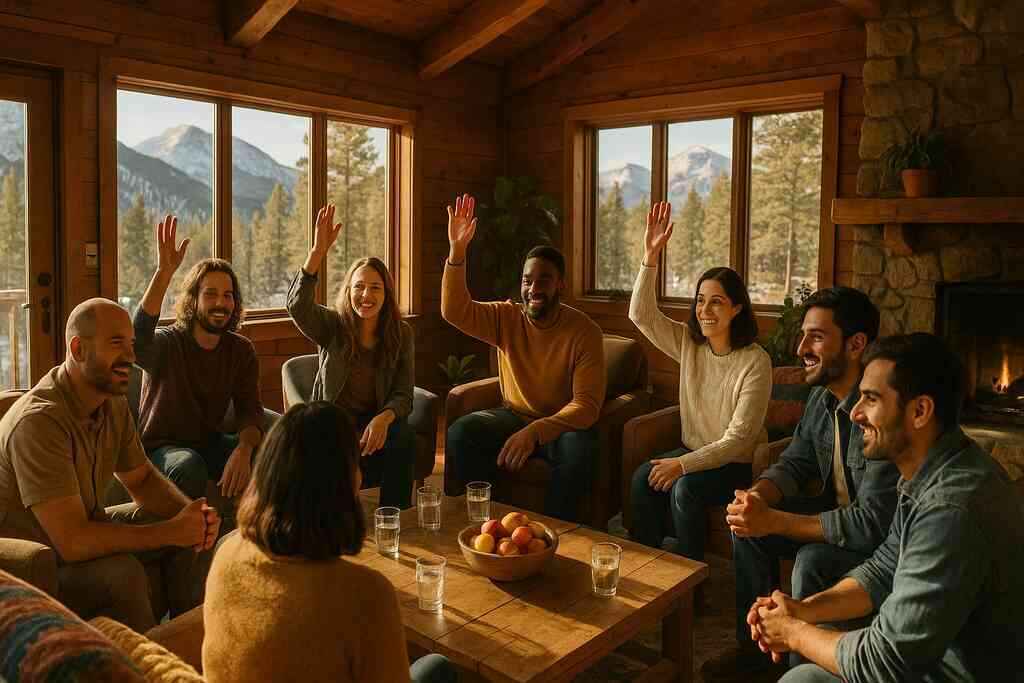 From Voting to Victory: Peer Accountability in Daily Recovery
Daily Routine Architecture Morning Check Ins to Evening Reflections
Residents wake early, grounding themselves with quiet breathing before noise fills the kitchen. Structured check-ins follow, where every person shares a feeling and a measurable goal for the day. This ritual builds unity while keeping individual needs visible, reinforcing peer accountability and sober housing values. House managers listen silently, demonstrating mentorship without commandeering the process. By breakfast, the group has mapped chores, transportation, and support contacts, empowering proactive self-governance.
Consistency continues through evening reflections, held around the living room table once chores finish. Participants review goals, celebrate wins, and note missed opportunities for tomorrow’s council agenda. This disciplined cadence mirrors guidelines prospective members notice when they search sober homes near your city. Transparency during reflections improves trust, reducing hidden stress that often triggers alcohol abuse. Over time, residents associate nightly accountability with emotional safety, not punishment, strengthening long-term sobriety habits.
Peer Driven Accountability Framework and Relapse Prevention Strategies
A peer driven accountability framework transforms theoretical relapse prevention plans into lived practice. Residents pair in “sobriety dyads,” texting each other if cravings spike between meetings. The dyads report patterns to the weekly safety committee, which updates coping protocols accordingly. Because data originates from residents, adjustments feel relevant and timely, keeping engagement high. This bottom-up feedback loop outperforms rigid rules crafted far from the living experience.
Studies show cravings drop when residents speak up, as detailed in the role of peer support inside sober environments resources. Group meetings practice this skill through role-play, letting participants rehearse vulnerable language without judgment. Afterwards, the council logs which techniques worked, updating a shared relapse prevention manual stored beside house rules. Residents carry printed pocket cards listing emergency contacts and grounding exercises, merging communal learning with personal responsibility. This integrated approach lowers relapse incidents and enhances confidence in the democratic sober living houses system.
Early recovery sometimes brings unexpected physical discomfort, so education remains critical. Orientation classes teach residents to learn the signs of withdrawal symptoms, empowering them to act before a crisis escalates. Peers monitor each other respectfully, using agreed codes to summon help without fostering shame. Timely intervention maintains house stability and preserves full autonomy for those still adjusting. Consequently, the community views health vigilance as collective stewardship rather than intrusive surveillance.
Community Based Leadership Skills for Long Term Sobriety
Leadership opportunities saturate daily life, from chairing meetings to organizing hiking trips that replace past partying habits. Residents rotate positions monthly, guaranteeing everyone practices facilitation, budgeting, and conflict mediation. These tasks translate directly into workplace competencies, increasing employability after graduation. Graduates often credit resident councils for teaching them to negotiate respectfully under pressure. Such transferable skills form the bedrock of sustainable independence outside structured sober housing.
Alumni return for workshops on networking and civic engagement, introducing future support systems for long-term sobriety. These sessions illuminate pathways into volunteer leadership at halfway houses or city advisory boards. By witnessing peers thrive in public roles, current residents expand their own ambitions beyond mere abstinence. The cycle of mentorship reinforces Colorado’s culture of mutual aid, anchoring recovery in service. Momentum built inside the Top sober homes resident council continues to ripple across communities long after move-out day.
Integrating Outpatient Program Goals with Transitional Living Peer Governance
Outpatient therapists often assign cognitive homework, yet completion rates soar when tasks are embedded within house meeting agendas. Residents share short presentations summarizing insights and inviting feedback, turning individual therapy into group learning. A liaison elected by the council tracks each member’s clinical milestones, balancing confidentiality with accountability. The system exemplifies understanding peer governance in Colorado homes by merging professional directives with resident autonomy. Therapists appreciate the feedback loop, adjusting treatment plans to fit communal rhythms instead of disrupting them.
Councils schedule study hours before evening activities, preventing conflict between homework and communal responsibilities. Members struggling with time management receive peer mentoring rather than punitive consequences. This supportive scaffolding preserves dignity while maintaining high standards, hallmarks of transitional living peer governance Colorado champions. When residents eventually discharge from outpatient care, they already possess the skills to integrate external obligations smoothly. The practice therefore minimizes relapse risk during lifestyle transitions, historically vulnerable periods in early recovery.
Building Mutual Support Sober Living Programs Across Denver Springs and Boulder
Geography never divides peer solidarity; instead, inter-house alliances connect Denver, Colorado Springs, and Boulder through monthly joint forums. Representatives trade best practices, comparing data on occupancy, graduation rates, and community service hours. Lessons then cascade back into individual homes, accelerating innovation without reinventing wheels. This network showcases the community presence of Top Sober House in Colorado, proving collaboration thrives beyond single rooftops. Shared events like charity 5Ks and trail cleanups further bind the tri-city recovery cohort.
The alliance runs a shared digital bulletin, posting job leads and ride-share requests, pooling resources efficiently. Resident artists design motivational posters exchanged between houses, reminding newcomers they belong to a larger mission. Cross-house sponsorship matching broadens support circles, ensuring nobody lacks a seasoned guide during crises. Graduates often keep attending these regional meetings, offering experience while benefiting from ongoing accountability. Thus, mutual support moves outward like concentric waves, anchoring long-term sobriety across the Front Range landscape.
Summit of Shared Success Empowering Futures Beyond the Front Range
Measuring Sustainable Long Term Sobriety Through Community Metrics
Top Sober House believes success must be measured, not assumed, so every democratic sober living house collects detailed recovery data. Residents track consecutive sober days, completed outpatient assignments, and community service hours, then review trends during monthly council meetings. This transparent scoreboard keeps the Colorado sober living peer model grounded in facts while reinforcing peer accountability and sober housing values. When early warning patterns appear, the council quickly adjusts routines, proving that numbers can inspire compassionate interventions. Over time, visible progress boosts morale and confirms that resident-led metrics outperform anonymous, top-down reports.
Data also drives strategic planning. For example, relapse rates fall sharply when residents participate in three outdoor events monthly, so councils schedule additional hikes each season. Employment stability improves when mentoring sessions happen twice weekly, prompting longer evening office-skills workshops. These insights travel between properties, allowing each self-governed sober living environment to evolve faster than stand-alone programs. Because metrics remain public, newcomers immediately see tangible proof that sustained effort produces reliable gains. Such visibility nurtures sustainable long-term sobriety Colorado communities can celebrate with confidence.
Expanding Colorado Halfway House Leadership to All Fifty States
The Front Range governance blueprint now guides partner initiatives beyond state lines. Leaders travel, train, and support emerging groups, ensuring local culture enriches rather than dilutes the core peer governance principles. One shining example appears north of the border, where residents organized peer accountable residences in Wyoming after visiting Denver councils. They adapted mountain values to open-range realities without sacrificing inclusivity or democratic integrity. Their success proves Colorado halfway house leadership scales gracefully when humility and shared learning steer the expansion.
Top Sober House also hosts quarterly virtual summits that gather representatives from every region. Participants compare house rules, vote on national service projects, and refine training modules for new house manager mentors. This cross-pollination ensures that group decision-making in sober homes in coastal cities benefits from insights generated on alpine trails. As more states adopt the model, the organization moves closer to its vision of accountability, empowering residents in recovery from coast to coast. Ultimately, collaboration replaces competition, raising national standards for substance use disorder support.
Alumni Networks and Ongoing Peer Support After Moving Out
Graduation is not an exit; it is a bridge to broader service. Alumni join digital forums where they schedule check-ins, share job leads, and volunteer as emergency contacts for current residents. These continuous connections prevent the isolation that often shadows early independence, reinforcing lessons learned inside resident-led sober homes Colorado pioneered. Regular participation also lets alumni practice leadership without daily house chores, expanding their influence while respecting new occupants’ autonomy. Everyone wins when experience flows back into the community pipeline.
Alumni programs include regional meet-ups, mentorship pairings, and collaborative service projects like neighborhood clean-ups or charity runs. Members report that giving back strengthens their own long-term sobriety and deepens gratitude for the democratic sober living houses that launched their journeys. Feedback gathered during these events feeds directly into council agendas, ensuring fresh perspectives refine existing policies. By honoring past, present, and future residents equally, Top Sober House creates a multigenerational safety net that no single therapist or treatment program could replicate.
Inviting Readers to Discover a Top Sober House Near You and Join the Journey
If you or someone you love longs for a safe place that balances autonomy with unwavering support, explore the Top Sober House directory today. Simply enter your city to find a sober house near me that aligns with your personal goals, transportation needs, and preferred structure. Each listing details house rules, peer governance features, and available support groups, helping you choose confidently. From bustling Denver neighborhoods to quiet mountain valleys, there is a top sober house near you waiting to welcome fresh energy and new ideas. Your next chapter can begin the moment you decide to walk through a resident-run doorway and raise your hand to vote.
Remember, recovery thrives on community. Democratic councils, structured routines, and shared adventures can transform fear into purpose faster than solitary willpower ever could. By joining this participatory network, you gain allies committed to protecting the sober environment you will soon help govern. Take that first empowering step now, and let peer leadership guide you toward heights even Colorado’s famous peaks cannot match.
Frequently Asked Questions
 Frequently Asked Questions
Question: How does the Top Sober House peer governance model guide day-to-day life inside Colorado sober housing?
Answer: The Colorado sober living peer model places residents at the center of every decision. Each week a resident council meets to vote on budgets, chore rotations, curfew adjustments, and even community service projects. Motions are seconded, debated, and passed by a simple majority, so everyone has an equal voice. Morning check-ins, evening reflections, and sobriety dyads create a peer-driven accountability framework that keeps cravings in check and house tasks on track. Because authority is shared rather than imposed, residents learn leadership skills, practice conflict resolution, and leave confident they can maintain long-term sobriety in any environment.
Question: What does the house manager mentorship program do inside a self-governed sober living environment?
Answer: In every Top Sober House the house manager acts as a mentor, not a warden. Trained in trauma-informed language and motivational interviewing, this mentor models respectful dialogue, guides new residents through orientation, and steps in only when the council needs coaching. By guiding without governing, the mentor keeps the sober environment safe while still allowing peer governance to flourish. This balance prevents power vacuums, supports shared governance substance use disorder solutions, and prepares residents for healthy relationships with supervisors once they graduate into independent living.
Question: In the blog How Top Sober House Uses Peer Governance Models in Colorado you mention collaborative house rules development. How are residents involved in creating and enforcing these rules?
Answer: Every rule begins in an open brainstorming session where residents list concerns and goals for a supportive environment. Ideas are ranked through consensus scoring until a draft constitution emerges covering curfews, visitor guidelines, and relapse protocols. After the house manager confirms legal compliance, the document is ratified by unanimous vote and posted in common areas. Because residents design the rules themselves, adherence feels voluntary, peer accountability sober housing increases, and conflict drops sharply. When circumstances change-such as adding a new outpatient program schedule-the council simply amends the rulebook, keeping the system flexible and resident-led.
Question: How does Top Sober House integrate outpatient program goals with resident-led sober homes in Denver, Boulder, and Colorado Springs?
Answer: Transitional living peer governance Colorado style means therapy does not stop at the clinic door. Each house elects an outpatient liaison who tracks member assignments, schedules study hours, and reports progress to the resident council while protecting confidentiality. Short presentations turn individual therapy homework into group learning, and peers offer feedback or time-management tips instead of punishment. This seamless bridge between clinical care and sober housing boosts completion rates, reinforces coping skills, and lowers relapse risk during vulnerable transitions.
Question: Why should I use the Top Sober House directory when searching for a safe place or sober house near me?
Answer: The directory lists top sober houses in all 50 states, complete with peer governance details, house rules, availability, and transparent reviews. Whether you want a democratically run sober house near you in a bustling Denver neighborhood or a quieter mountain valley, filters let you compare supportive environments quickly. Each listing explains residency costs, 12-step meeting schedules, and mentorship options so you can choose the exact level of structure you need. By combining clear information with proven Colorado halfway house leadership strategies, Top Sober House makes it easy to start your recovery journey in a community that honors dignity, autonomy, and lasting sobriety.